
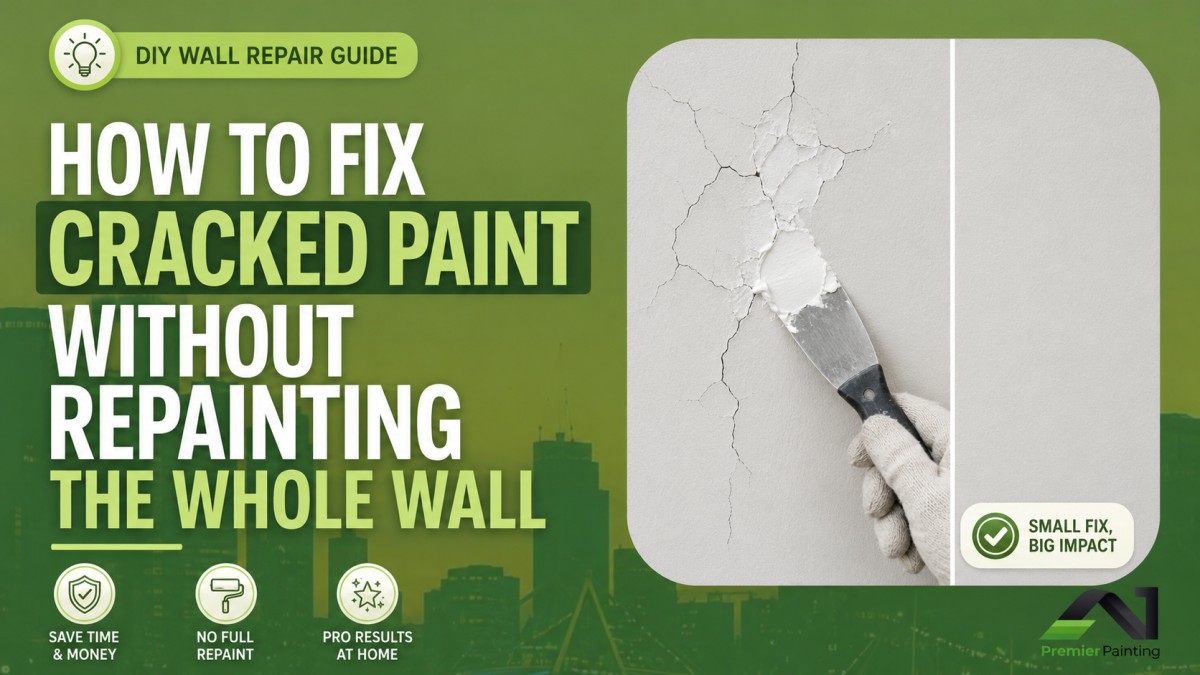
If you’ve spotted a crack running through your paintwork, your first thought is probably “great, now I need to repaint the whole room.” Take a breath. Most cracked paint is a patch job, not a full redo. The trick is knowing which kind of crack you’re dealing with and fixing it properly the first time, rather than slapping paint over the top and watching it split again in six months.
Melbourne’s weather doesn’t help. We go from 12 degrees to 30-plus in the same week some months, and that kind of temperature swing puts real stress on paint film, especially around window frames, cornices, and older plaster walls. Here’s how to work out what you’re actually dealing with and how to fix cracked paint without tearing into the whole wall.
Why Does Paint Crack on Walls in the First Place
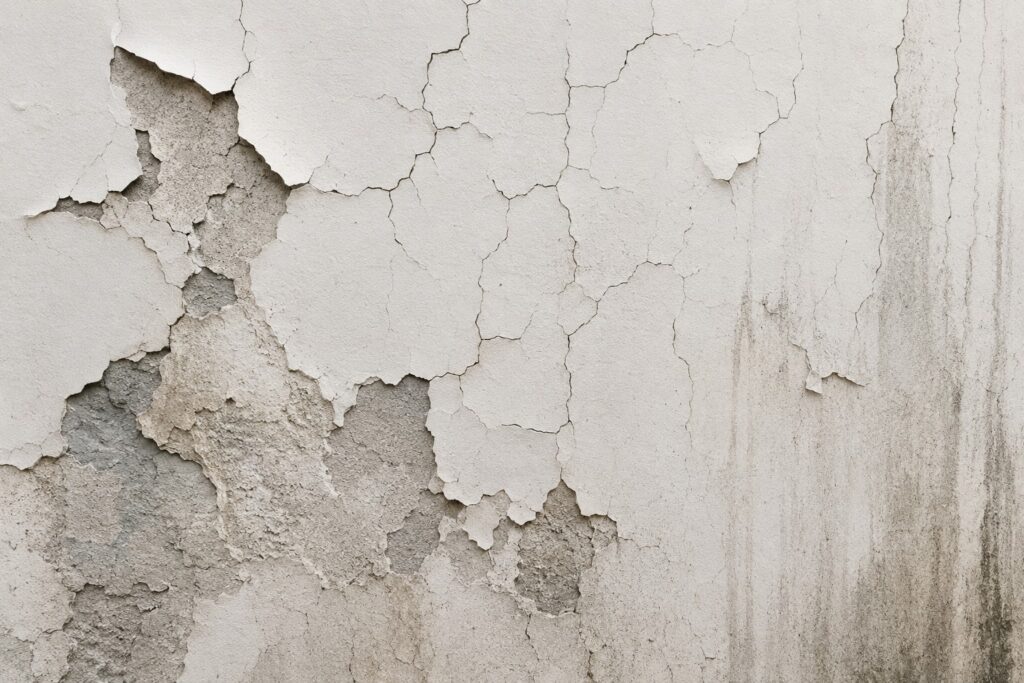
Cracking rarely happens for no reason. Usually it’s one of a few things, sometimes stacked on top of each other. Age is the obvious one. Paint film loses flexibility over 10, 15, 20 years, and it eventually can’t cope with the wall moving underneath it. Poor prep on the original job is another common culprit. If a painter skipped sanding, didn’t seal a patched area properly, or painted over a dusty, dirty surface, the new coat never bonded properly to begin with.
Cheap paint plays a part too. Low-grade acrylics don’t have the same flexibility rating as trade-quality paint, so they crack under thermal movement that better paint would simply absorb. Then there’s moisture behind the wall, which is the one you really want to catch early, plus straightforward temperature fluctuation, the kind Melbourne throws at us constantly. If you patch over a crack without addressing whichever of these caused it, you’re just buying yourself a few months before it reappears.
How to Tell If You Can Patch It or Need a Full Repaint
Not all cracks are equal, and telling them apart doesn’t require a trade certificate. Hairline cracks, the fine ones that look like a strand of hair across the surface, are almost always cosmetic. They’re common around cornices, above doorframes, and on plasterboard joins where the house has done its normal seasonal shift. These patch up fine.
What you want to watch for is anything wider than a couple of millimetres, cracks that reappear in the same spot after you’ve already patched them once, or paint peeling that comes away in flakes rather than just splitting along a line. Bubbling paint or a slightly soft, spongy feel to the wall usually points to moisture sitting behind the surface, and that’s a different problem altogether. If you’re seeing any of those signs, it’s worth getting a proper look before you reach for the filler.
How to Fix Cracked Paint Step by Step
Once you’ve confirmed it’s a straightforward cosmetic crack, here’s the order that actually works.
- Scrape back loose paint. Use a scraper or stiff putty knife to remove any paint that’s already lifting around the crack. Don’t just paint over flaking edges, they’ll keep flaking underneath the new coat.
- Sand the area. Feather the edges of the crack with fine-grit sandpaper so there’s no hard ridge between old paint and bare wall. This is what stops the patch looking like a visible scar later.
- Apply wall filler. Push filler into the crack with a flexible putty knife, slightly overfilling since it shrinks a touch as it dries. Let it cure fully before moving on, rushing this step is the number one reason patches fail.
- Sand again. Once dry, sand the filled area back flush with the surrounding wall.
- Prime the patch. This step gets skipped constantly and it’s the one that matters most for durability.
- Repaint to blend. Feather your paint out past the edges of the patch so it doesn’t read as an obvious rectangle on the wall.
Rushing the drying time between filler and primer is the most common reason a “fixed” crack comes straight back.
Choosing the Right Paint Primer and Filler for the Job
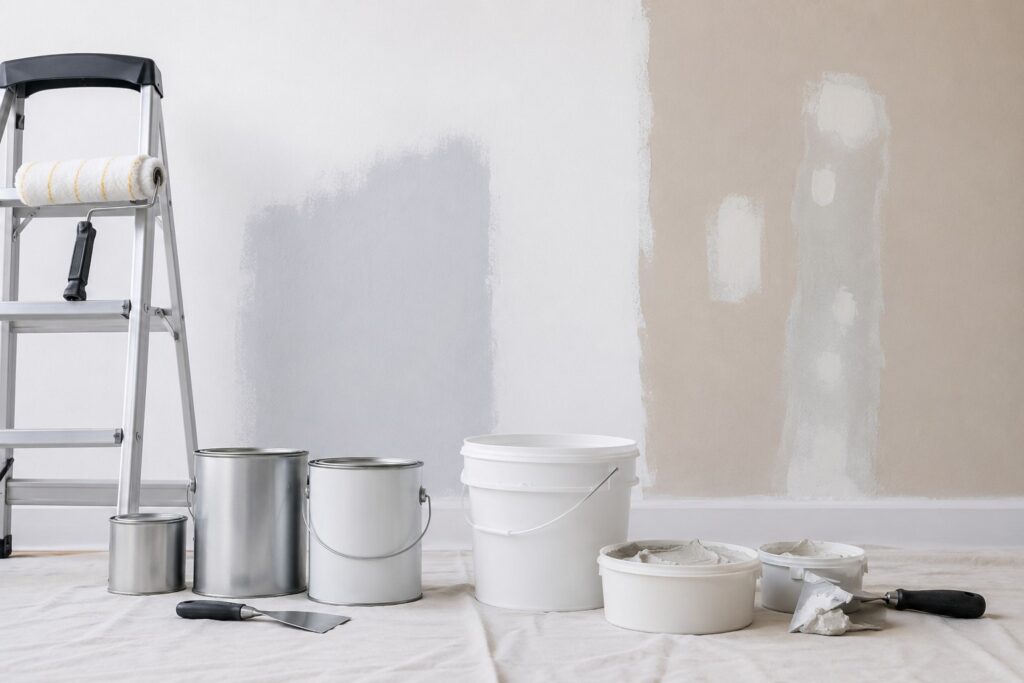
- The product used for all walls is not the same.
- Plaster and plasterboard require a sealer primer to avoid patches being painted differently.
- This prevents any visual differences in sheen after the paint is dry.
- Apply flexible filler to joints, corners or thermal movement zones.
- If the dent is small and stable, use rigid filler to fix it.
- When using rigid filler on moving joints, cracks will reappear within a year.
- The proper primer for the wall type guarantees a long-lasting and smooth repair.
How to Stop Paint from Cracking Again
Prevention comes down to a few basics. Proper prep before the next paint job matters more than the paint itself, sanding, cleaning, and priming properly rather than rushing to the topcoat. Choosing a quality paint with a flexibility rating suited to exterior or high-movement areas will save you a repeat job down the track.
Avoid painting in extreme heat if you can help it. Paint applied on a 35-degree Melbourne day dries too fast and doesn’t cure properly, which sets it up to crack early. And keep an eye on moisture sources, leaking gutters, poor bathroom ventilation, or rising damp, since these will undo even a perfect paint job if left unaddressed.
FAQs
How do I stop paint from cracking? Good prep is the main defence, proper sanding, cleaning, and priming before painting. Use quality paint rated for flexibility, avoid painting in extreme heat, and deal with any moisture issues like leaking gutters before you pick up a brush.
Why does paint crack on walls? Usually it’s a combination of paint age, poor original prep, low-quality paint, moisture behind the wall, or temperature swings. Melbourne’s climate makes the last one especially common.
How do I prevent paint cracking in the future? Prep properly, choose flexible, quality paint, avoid extreme heat during application, and fix any moisture sources before repainting rather than after.
Can I patch cracked paint without repainting the whole wall? Yes, in most cases. Hairline and cosmetic cracks can be scraped, filled, sanded, primed, and repainted in just the affected area, blending it into the surrounding wall.
What’s the best filler for cracked walls? Flexible filler for joints and areas with movement, rigid filler for small, stable dents. Using the wrong one is a common reason cracks come back.
Do I need to prime a patched wall before repainting? Yes. Skipping primer is the most common reason patches fail or show up as a different sheen once painted over.
How do I know if cracked paint is just cosmetic or a bigger problem? Fine hairline cracks are usually cosmetic. Wider cracks, recurring cracks, peeling paint, or bubbling and soft spots usually mean moisture or structural movement and are worth getting assessed.
When a Patch Job Isn’t Enough
(And You Need Professional Wall Repair in Melbourne)
DIY paint repair is genuinely fine for small hairline cracks and surface-level cosmetic peeling. That’s not a job that needs a tradesperson. But recurring cracks in the same spot, damp patches, bubbling paint, or any sign of structural movement are a different story. These point to something happening behind the wall that a tube of filler won’t fix, and painting over it just hides the problem until it’s worse and more expensive.
If you’re not sure which category your wall falls into, that’s exactly the kind of thing worth getting assessed properly rather than guessing.
Not sure if your cracked paint is a quick patch or something more? A1 Premier Painting can take a look and give you a straight answer, free of charge. It’s a lot cheaper than guessing wrong and paying to fix it twice. Get in touch for a free assessment today.