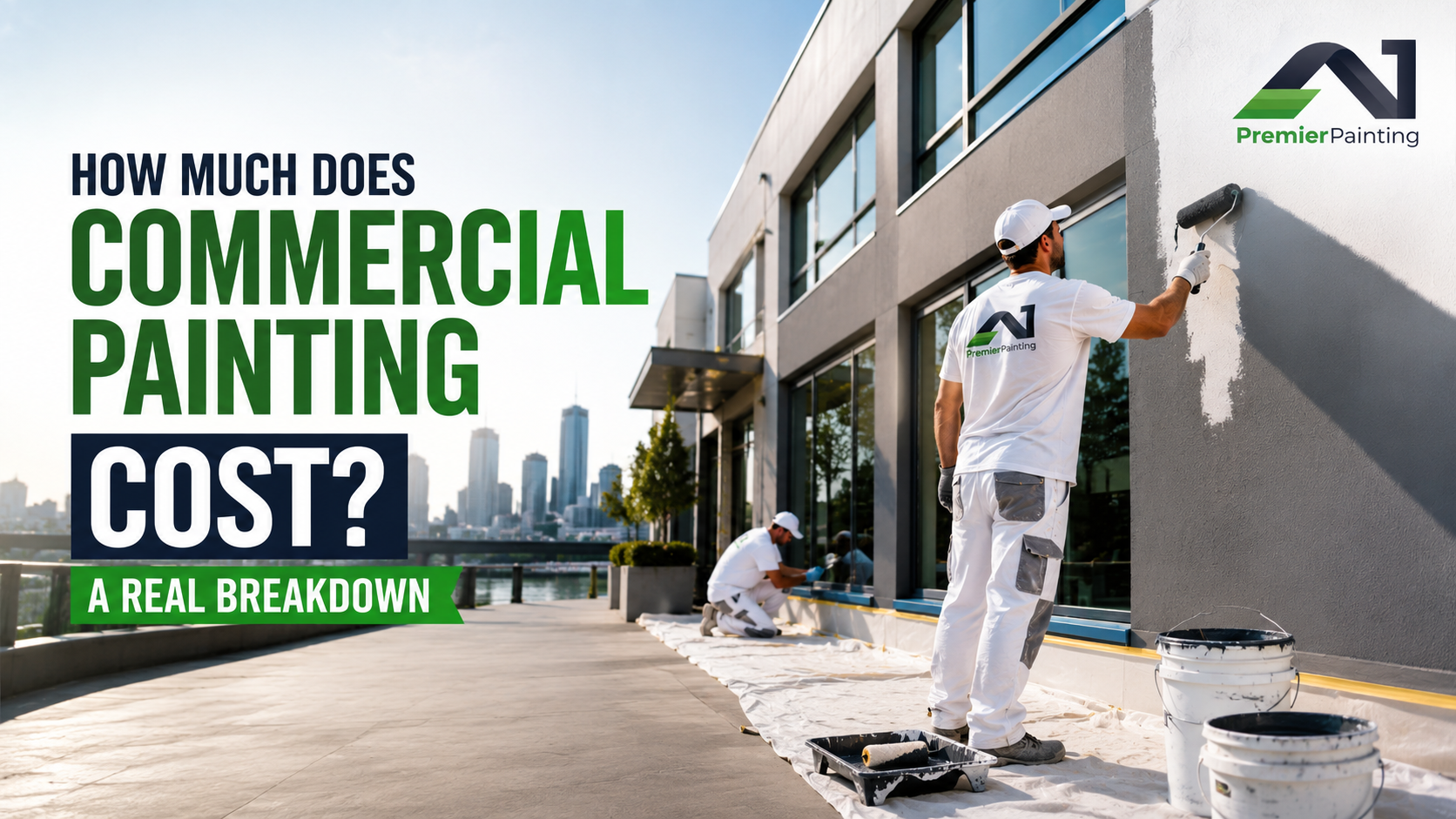
Two commercial buildings that look similar in size can come back from quoting with very different numbers, and the reason is rarely the paint itself. Business owners are often surprised when a straightforward-looking office costs less to repaint than a retail space half its size.
The real question behind commercial painting cost is not what a fixed rate looks like; it is what actually drives that number up or down, and how you read a quote well enough to know if it is fair. Here is a genuine breakdown of the main cost factors, how per-square-metre thinking works and where it falls short, and what a proper quote should show you.
Why Two Commercial Painting Quotes Can Look So Different
Most of the variation between two quotes for a similar-looking building comes down to a handful of factors a business owner rarely thinks to ask about before the contractor arrives on site. Surface condition and access are usually the two biggest swings.
Surface Condition and Preparation Work
The amount of preparation a building needs before paint goes on is usually the single biggest factor in why one quote comes in higher than another. Patched render, rust treatment on exposed steel, or old coatings that need stripping back before a new system can go on all add labour hours that have nothing to do with how much paint gets rolled onto the wall. A building that looks fine from the car park can still need far more prep work once a contractor gets close enough to see the surface properly.
Access, Height and Site Complexity
Scaffolding, elevated work platform hire, multi-storey access, or a tight retail frontage that only allows work at certain hours all change how long a job takes, regardless of how much wall area is actually being painted. A single-storey warehouse with open floor access is a very different job to a three-storey office tower where every wall needs a lift or scaffold just to reach it, even if the total square metreage is similar on paper.
What Drives Commercial Painting Cost Up or Down
The main variables behind commercial painting cost are consistent across most jobs, even though the exact weighting changes from site to site. Total surface area across walls, ceilings, and trims sets the baseline. The condition of existing surfaces and how much preparation is required often matters more than the area itself. Product quality and the number of coats specified add material and labour time, particularly where an industrial-grade coating is required over a standard commercial paint.
Whether the job covers interior work, exterior work, or both changes the scope significantly, and access requirements, whether that means scaffolding for a multi-storey building or restricted hours on a retail site, all affect how long a crew needs to be on site. Scheduling around a business that needs to keep operating also adds a layer most residential jobs never have to account for.
Commercial Painting Price Per Square Metre, How It Actually Works
Commercial painting price per square metre is a useful starting reference for early conversations, but it rarely tells the full story once you look at a specific building.
Why Square Metre Alone Does Not Set the Price
A straightforward, open wall costs less per square metre to paint than a wall broken up by windows, door frames, and fittings, simply because cutting in around trims and masking off fixtures takes far more time than rolling a flat, uninterrupted area. Two walls of identical size can end up priced quite differently once you account for how much detail work is involved in each one.
Where Per-Square-Metre Estimates Are Useful
A rough per-square-metre figure is genuinely useful for early budgeting conversations or for comparing scope between two buildings of a similar type before a site visit happens. Where it falls short is as a final number, since the actual figure should always come from a site-specific quote that accounts for condition, access and detail work rather than area alone.
Cost to Paint a Commercial Building, Office, Retail and Industrial Compared
The cost to paint a commercial building shifts noticeably depending on what kind of building it is. An office repaint tends to involve occupied space, after-hours or weekend access, and low-odour products so staff are not disrupted, all of which add labour and scheduling complexity compared with an empty building. A retail fitout usually needs staged work around shopfront access and trading hours, which can mean a longer timeline even on a smaller footprint.
An industrial site is different again, typically involving a larger surface area, specialised coatings for plant or equipment areas, and shutdown windows that need to be coordinated around production schedules rather than convenience. None of these are automatically more expensive than the others; the actual driver is how much preparation, access complexity, and specialised product each site needs.
What a Proper Commercial Painting Quote Should Include
A transparent commercial painting quote breaks the scope down by area rather than presenting a single lump-sum figure. It should specify the surface preparation method for each section, the product and finish being used, and separate labour and access costs so you can see where the money is actually going.
A timeline should also be included, particularly if the job needs to be staged around your business. A vague, one-line quote with no breakdown makes it genuinely difficult to compare against another contractor fairly, since you have no way of knowing whether preparation work, access costs, or a lower-grade product are the reason one number came in lower than another.
Commercial Painting Rates, Why They Vary Between Contractors
Commercial painting rates differ between contractors for reasons that have little to do with how good the final finish will be. Licensing and insurance overheads are higher for a contractor properly set up for commercial work, and that cost has to be built into their rates somewhere. Crew experience with commercial sites matters too; an experienced team moves faster through prep and access challenges than one that mostly works on houses.
Equipment ownership versus hire is another factor; a contractor who owns scaffolding or an EWP outright can often price access more competitively than one hiring equipment for every job. How preparation work is handled also matters; some contractors price it upfront, while others treat unexpected substrate conditions as a separate variation once the job has already started, which is where costs can climb after the fact.
How to Get an Accurate Office Repaint Cost or Commercial Quote
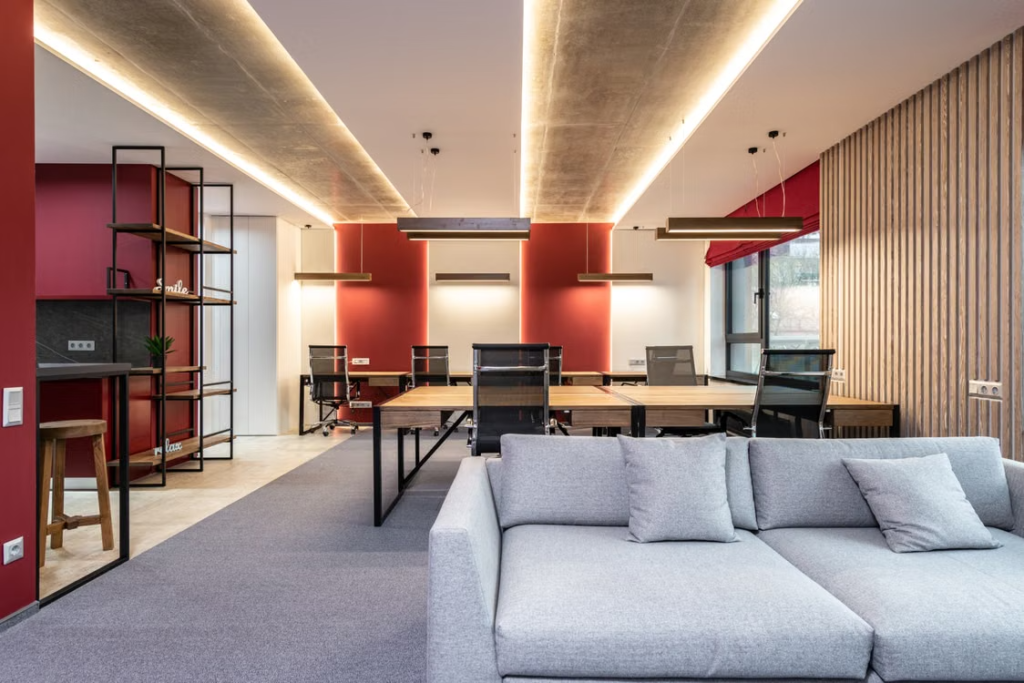
Getting an accurate office repaint cost or broader commercial quote starts with requesting a site visit rather than accepting a phone or email estimate. Ask for the quote to be broken down by area and task, not just handed over as a single total.
Confirm upfront what would trigger a variation, whether that is unexpected substrate condition or a change in access, so there are no surprises once work begins. Getting the product and finish specified in writing also makes it possible to compare quotes from different contractors on equal terms, rather than guessing whether they are actually quoting for the same job.
What to Expect From a Transparent Commercial Painting Quote
A properly run quoting process starts with the site being assessed in person, not priced from a description over the phone. Scope and product schedule should be confirmed in writing before any work begins, so both sides are working from the same expectations. Any potential variations, whether that is unexpected substrate condition once prep starts or a change in access arrangements, should be flagged upfront as a possibility rather than added as a surprise once the job is already underway.
FAQs
1. How much does commercial painting cost?
There is no fixed figure, since cost depends on surface area, condition, access, and product specification for each building. An accurate number only comes from a site assessment rather than a general estimate.
2. What is included in a commercial painting quote?
A proper quote breaks the scope down by area, states the preparation method, specifies the product and finish, separates labour and access costs, and includes a realistic timeline for the work.
3. How is commercial painting price per square metre calculated?
It starts with total wall area but adjusts for detail work like cutting-in around windows and trims, surface condition, and access requirements, which is why two similarly sized areas can be priced differently.
4. What is the average cost to paint a commercial building?
There is no single average, since building type, condition, access, and product specification all vary significantly between sites. A site-specific quote gives a far more accurate figure than an average ever could.
5. Why do commercial painting rates vary between contractors?
Licensing and insurance overheads, crew experience with commercial sites, equipment ownership versus hire, and how preparation work is priced all contribute to why one contractor’s rates differ from another’s.
6. What affects the cost of an office repaint?
Occupied space, after-hours or weekend access requirements, and low-odour product needs all add complexity compared with an empty building, alongside the usual factors of surface area and condition.
7. Does surface preparation add to the cost of a commercial paint job?
Yes, and it is often the biggest factor in the final figure. Patched render, rust treatment, or stripping old coatings all add labour time well before any paint goes on the wall.
8. Is a per-square-metre estimate accurate enough to budget with?
It works well for early, rough budgeting conversations, but it should not be treated as a final figure. Detail work, access, and condition all shift the real cost beyond a flat area calculation.
9. Why did my commercial painting quote come back higher than expected?
This usually comes down to preparation work, access requirements like scaffolding, or a higher-grade product specification that was not accounted for in an earlier rough estimate or a different contractor’s lump-sum figure.
10. How can I compare commercial painting quotes fairly?
Request quotes broken down by area and task rather than a single total, confirm the product and finish specified, and ask what would trigger a variation before comparing the final figures side by side.
Ready for an Accurate Quote?
Getting an accurate picture of what your building will cost to paint means having the scope, product, and access costs broken down in writing, not guessed from a phone call. A1 Premier Painting assesses every commercial site in person before providing a quote, so you know exactly what is driving the number before you commit to a job. Get in touch to arrange a site visit and a proper breakdown for your property.